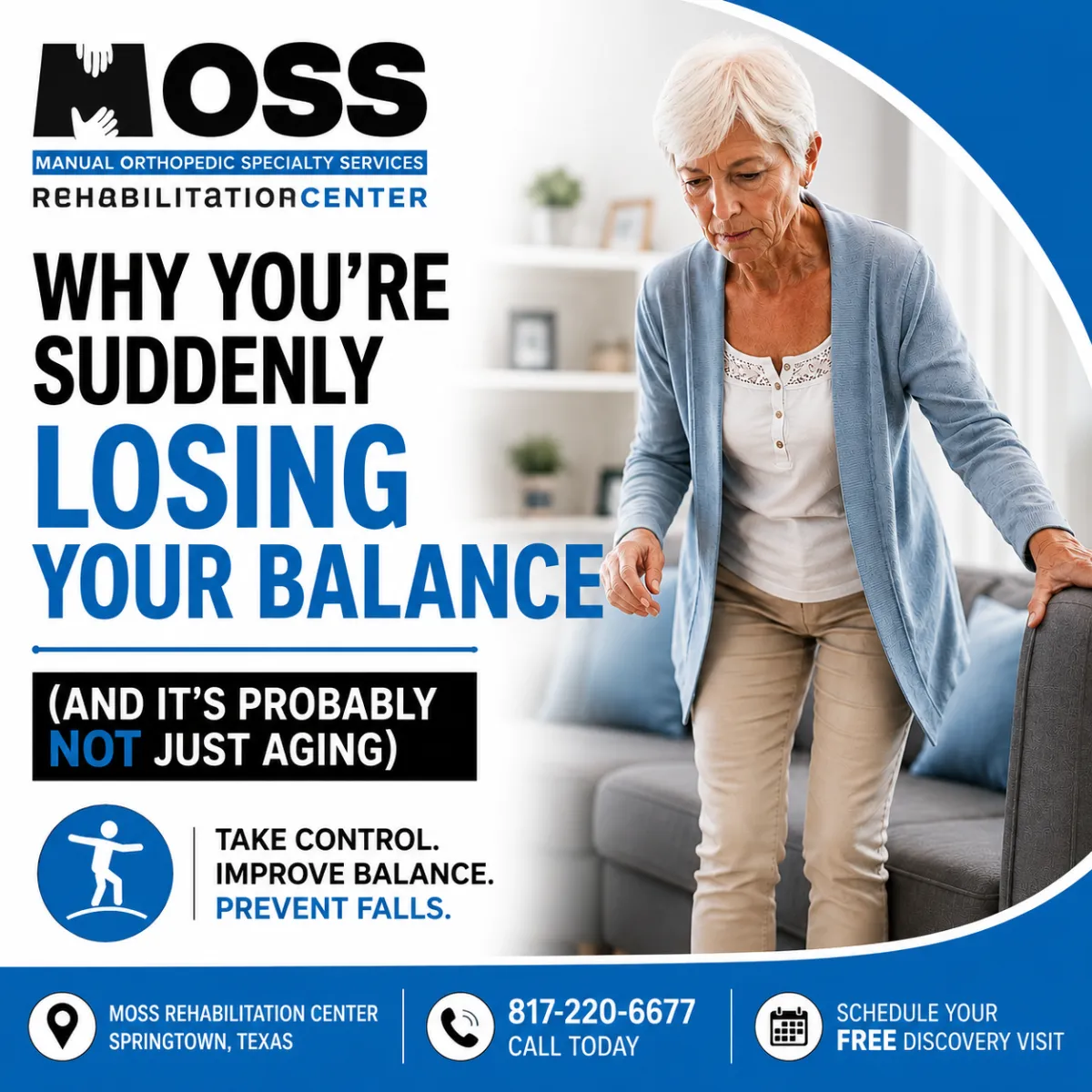
Why You're Suddenly Losing Your Balance (And It's Probably Not Just Aging)
Have you noticed yourself grabbing the kitchen counter as you walk by?
Maybe you've become more cautious when stepping off a curb, getting out of bed, or walking across a parking lot.
These changes often happen so gradually that they're easy to dismiss.
"It's just part of getting older."
While aging can affect strength and coordination, suddenly feeling less steady isn't something you should simply accept. In many cases, your body is giving you early warning signs that something has changed.
The encouraging news is that balance problems are often treatable, especially when they're addressed early.
Balance Changes Aren't Always "Just Aging"
Your ability to stay balanced depends on several body systems working together.
Your muscles provide strength.
Your joints provide mobility.
Your eyes help you understand where your body is in space.
Your inner ear helps detect movement and changes in position.
Your brain processes all of that information and tells your body how to react.
If even one of these systems isn't working properly, you may begin feeling less steady.
The sooner the cause is identified, the sooner you can begin improving your balance and reducing your risk of falling.
Common Reasons You May Feel Unsteady
There are several reasons you may notice changes in your balance.
Weak Muscles
Strong legs and core muscles help stabilize every step you take. As these muscles weaken, everyday activities like walking, climbing stairs, or standing from a chair become more challenging.
Joint Stiffness
Reduced flexibility in your ankles, knees, hips, or spine limits your body's ability to react quickly if you trip or lose your footing.
Inner Ear Problems
Your inner ear plays an important role in maintaining balance. Certain conditions can cause dizziness, vertigo, or the sensation that the room is spinning.
Medication Side Effects
Some medications may contribute to dizziness or lightheadedness. If you've noticed balance changes after starting a new medication, discuss your concerns with your healthcare provider before making any changes.
Fear of Falling
Sometimes the greatest obstacle isn't physical.
After experiencing a stumble or near fall, many people begin avoiding activities they once enjoyed. Unfortunately, less movement often leads to weaker muscles and poorer balance, creating a cycle that's difficult to break.
Early Warning Signs You Shouldn't Ignore
Falls rarely happen without warning.
Your body often provides subtle clues that your balance is changing.
Watch for signs like:
Holding onto furniture while walking
Walking slower than you used to
Feeling unsteady when standing up
Avoiding stairs or uneven surfaces
Looking down while walking instead of ahead
Feeling less confident leaving the house
Avoiding activities because you're afraid of falling
Recognizing these warning signs early gives you the opportunity to take action before a fall leads to a more serious injury.
The 3 D's: A Simple Philosophy That Can Protect Your Health
At MOSS Rehabilitation Center, Dr. Robert Moss encourages patients to remember The 3 D's whenever they notice changes in their health.
Don't Ignore It
Small balance problems rarely stay small forever. If you've noticed changes in your balance, your body is trying to tell you something.
Don't Mask It
Holding onto furniture, avoiding activities, or simply moving less may seem like solutions, but they don't address the underlying cause. In many cases, these habits actually make the problem worse over time.
Do Something About It
The sooner you identify what's causing your balance problems, the sooner you can begin improving them. Physical therapy can help restore strength, mobility, confidence, and stability before a fall occurs.
Watch Dr. Robert Moss explain The 3 D's and learn how taking action early can help prevent bigger problems tomorrow.
Take Action Today
Don't ignore the warning signs of changing balance. Early intervention with physical therapy can improve your strength, stability, and confidence while helping reduce your risk of falls before they happen.
Call MOSS Rehabilitation Center at 817-220-6677 to schedule your FREE Discovery Visit and receive a personalized plan designed to help you stay active, independent, and safe.
You can also download:
The Top 8 Secrects to Improve Your Balance and Prevent Falls
"A healthy man has thousands of wishes, a sick man has only one."
– Agnes Karll
"Remember: start so small it is impossible to fail."
– Kaizen
Your Personalized Path to Recovery:
Schedule a FREE No Obligation Discovery Visit
During this visit, you will talk with one of our friendly experts about your issues. This is a safe and confidential visit, you can trust that your safety and privacy is important to us.
Receive a Customized Treatment Plan
Based on your free discovery visit, we will put together a custom, unique to your plan that will address all of your nagging pains and issues. The goal is to get you back to your healthy self as soon as possible while also addressing your issues for the long term.
Get Your Life Back and Do What You Love
The best result for us is a patient who tells us they can finally do what they love without the constant pain, stress, or issue they were facing. Together we can get you back to living life without worry.
To your health,
Dr. Robert Moss PT, ScD, OCS, FAAOMPT
Disclaimer: This article is for informational purposes only and is not a substitute for professional medical advice. Always consult with a healthcare provider before starting any new treatment.
